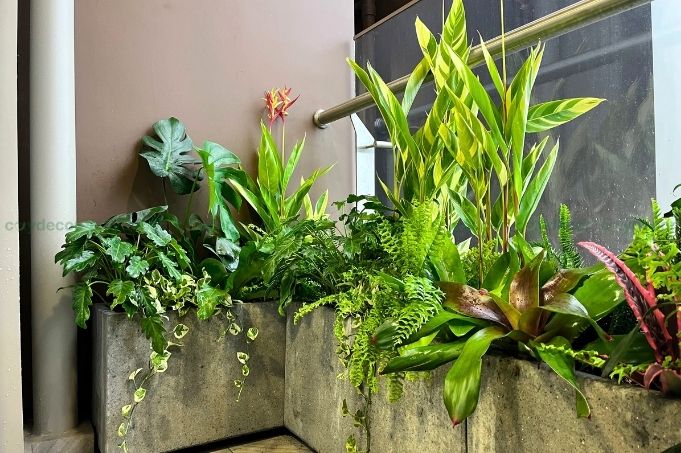
Nowadays, placing plants in living spaces not only enhances aesthetics but also plays a crucial role in purifying the air and improving both physical and mental health. However, many people often encounter problems when growing plants indoors due to a lack of understanding about the necessary amount of light, watering methods, or choosing suitable soil.

In this article, caydecor We will share tips on caring for indoor plants to help them stay healthy, vibrant, and maximize their benefits for your home.
Choose a suitable growing medium.
One of the most important factors in plant care is choosing the right growing medium. An ideal growing medium typically meets the following criteria:
- Good drainage capacity.
- Excellent moisturizing properties.
- Clean, free from pathogens, and safe for plants.
- The ability to store nutrients for a long time.
Some examples of growing media include: Coconut chunkspine bark, stone perlite, stone pumice, coconut coir…

Ensure the plants receive sufficient sunlight for growth.
Light plays a crucial role in photosynthesis, helping plants stay healthy. Each plant has its own light requirements: some tolerate shade well, while others need bright light. When caring for plants indoors, choose a location that receives at least 2-3 hours of natural light daily, and expose them to direct sunlight for about 2-3 hours each week.
Understanding the light requirements of each species will make caring for indoor plants much simpler.
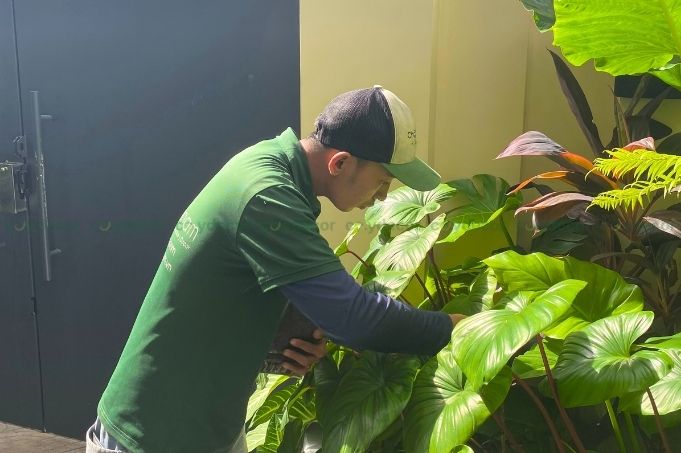
Watering properly
For indoor plant care, the ideal time to water is early morning (6-9 am) or late afternoon (4-6 pm), which minimizes evaporation and allows for more efficient water absorption. Avoid overwatering to prevent root rot. You can check the soil moisture by pressing your finger 2-3 cm into the soil: if it's still moist, watering isn't necessary; if it's dry, the plant needs watering.
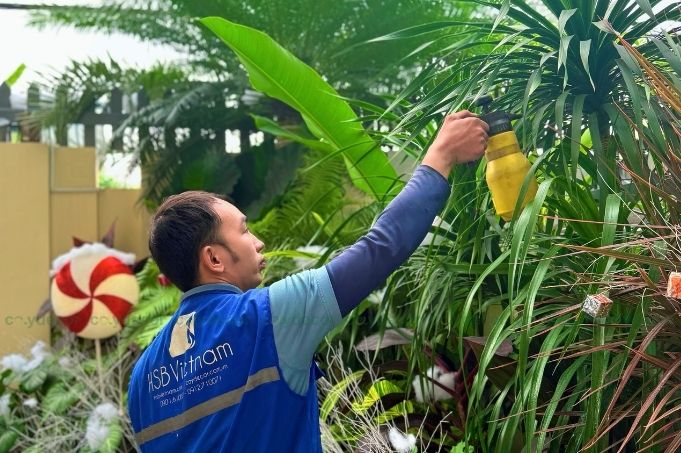
During the summer or on hot days, mist the plants twice a day to increase humidity and support photosynthesis.

Regular nutritional supplementation
Properly caring for indoor plants helps create fresh air and improve mood. For optimal growth, proper fertilization is essential – too much can cause disease, while too little will stunt their development. Fertilize approximately every two weeks.
Organic fertilizers (such as chicken manure, earthworm castings, or compost) can be used to improve soil and provide natural nutrients, or NPK fertilizers rich in nitrogen, phosphorus, and potassium can be used to promote rapid growth.
Optimal fertilization method: Spread fertilizer evenly around the edges of the pot to encourage root growth. Water after fertilizing to dissolve the fertilizer and allow the plant to absorb it.
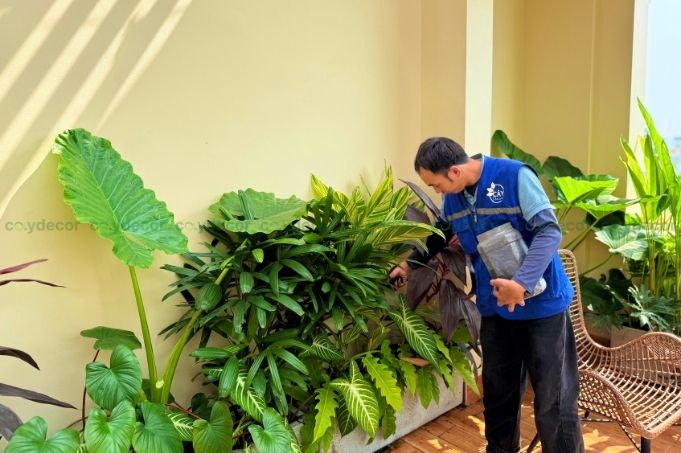
Avoid placing the plant near heat sources.
Many plants are very sensitive to high temperatures, easily losing water and wilting if placed near a heat source. Avoid placing plants on a windowsill in intense summer sun, or near air conditioner condenser units, heaters, or hot pipes.
For most houseplants, the ideal temperature is 24-29°C during the day and 16-24°C at night. Adjust the temperature seasonally to maintain consistent humidity, which will help your plants thrive.
Pest prevention and control
Indoor plants are generally more susceptible to pests and diseases than outdoor plants due to the enclosed environment, lack of natural ventilation, and low light. Common problems include mealybugs, spider mites, mildew, root rot due to waterlogging, or leaf spot disease. For effective prevention, keep the surrounding area clean: regularly remove fallen leaves and dust, and ensure good ventilation.
Clean the leaves regularly.
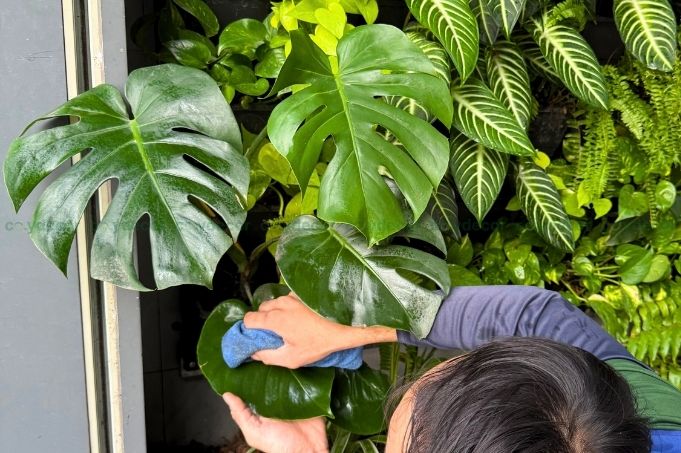
Dust accumulation on leaves is a common problem for indoor plants, especially in polluted cities. A thick layer of dust not only detracts from their appearance but also hinders photosynthesis, respiration, and transpiration. When caring for your plants, wipe the leaves weekly with a damp cloth, wiping both sides evenly.
Regularly wiping plant leaves also helps you detect common indoor plant diseases such as rust and pest infestations early on.
Regular trimming
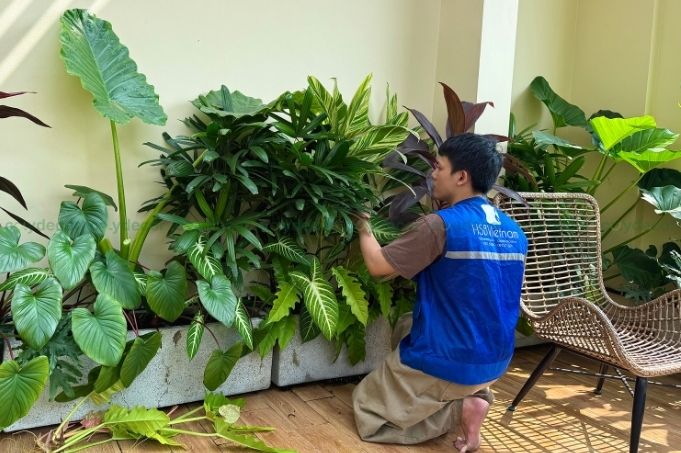
Pruning is an important step in plant care to maintain its beautiful shape and good health. Removing yellowing leaves, weak, withered, or diseased branches allows the plant to concentrate nutrients on healthy parts. Pruning also stimulates new shoot growth, making the plant more luxuriant.
The appropriate pruning cycle would involve removing dry, diseased, and damaged branches every two weeks, and shaping the canopy every three months.
Choose plants that suit the space.
Before buying plants, choose those that are easy to care for and suitable for your home conditions. Shade-tolerant, low-maintenance plants like snake plant, money plant, dwarf palm, jade plant, peace lily, or spider plant are ideal choices for beginners.