In large urban areas like Ho Chi Minh City, it's not uncommon to see expensive villa gardens with stunted, yellowing plants and frequent pest and disease infestations, despite meticulous watering. The cause is often not in planting techniques, but rather in soil that has been "depleted" after construction and leveling or prolonged overuse of chemicals. 5-Step Process for Garden Land Reclamation It's not just about adding a few bags of fertilizer, but a major "operation" to revive biological life. In this article, Caydecor will guide you. ways to restore degraded land according to the strictest organic standards – where the philosophy "cultivating the land" It is prioritized to create a purely organic landscape sustainable and enduring.

1. Why is it necessary to improve garden soil to a purely organic standard?
Land reclamation according to standards purely organic It's not just a green living trend, but a crucial technical solution to address the root causes of modern gardening problems.
Here are four main reasons why you need to go through this process:
1.1. Restoring the natural "Immune System"
Organically grown soil always contains a network of microorganisms and antagonistic fungi (such as Trichoderma).
- Mechanism: They actively eliminate pathogens that cause root rot and wilting.
- Benefit: Plants have the ability to develop their own resistance, which helps you. cut 80-90% the use of chemical pesticides.
1.2. Thoroughly address the problem of "dead soil" (compacted and hardened soil).
The soil in the gardens of villas is often compacted due to construction or the long-term use of chemical fertilizers.
- Organic renovation: This helps create gaps that allow oxygen and water to circulate.
- Self-cultivation: Attract earthworms back – these “workers” will till the soil for you 24/7, keeping it loose and aerated without manual intervention.
1.3. Optimizing water retention capacity and nutrition
Standard organic soil rich in Humus – likened to a giant sponge.
- Save: It helps retain water better, reducing the frequency of irrigation during the dry season.
- Sustainable nutrition: Unlike chemical fertilizers, which are easily leached away, organic nutrients are retained in the soil and released slowly as needed by the plants.
1.4. Creating a safe living space (Core value)
This is the most important reason for families with young children and pets.
- Health: Completely eliminate harmful chemical residues from the soil and air around the house.
- Environment: Purely organic soil helps filter rainwater, reduce groundwater pollution, and contribute to the protection of the local ecosystem.

2. Why does garden land in townhouses often degrade quickly?
Land in urban landscapes faces very different challenges than agricultural land. Understanding the causes of degradation is the first step in finding the right reclamation solutions.
- Source of fill soil: The soil used in landscape construction is often deep-layer clay that is poor in nutrients and completely lacks native microorganisms.
- Soil Compaction: Traffic, construction, and surrounding concrete structures cause the soil to become compacted, losing its oxygen- and water-containing pores.
- Chemical residues: Pesticides and chemical fertilizers saline the soil, killing beneficial organisms such as earthworms and antagonistic fungi.
See more at: Organic maintenance and 5 common misconceptions.
3. "Nourishing the soil" – The core philosophy in Caydecor's restoration process.
Unlike other companies that focus on rapid intervention, Caydecor applies a different concept. “soil cultivation“We don't try to "fix" the plants; we focus on building a healthy soil environment so that the plants can develop their own natural resistance.
Progress Restoring degraded land
Essentially, it's a process of re-establishment. aggregate structure The soil's structure is enhanced through biological activity. In "dead" soils, clay and sand particles are loose or tightly packed, hindering root penetration and gas exchange. When we implement organic remediation and microbial supplementation, a biological "miracle" begins to occur. Aerobic bacteria secrete bio-cohesives (polysaccharides), while fungal hyphae weave an invisible network linking individual soil particles into clusters. These clusters create micropores to retain water and macropores to drain water and store oxygen. Particularly in the South, with its long rainy season and intense sunshine, a stable, granular soil structure protects plant roots from waterlogging and root rot while maintaining ideal moisture levels during the dry season. garden land improvement This approach not only provides immediate aesthetic benefits but also creates a self-regenerating "nutrient bank," minimizing long-term maintenance costs for homeowners. This is the true value of a naturally harmonious ecosystem.
See more: What is organic mulch? Why is mulch important for landscaping?
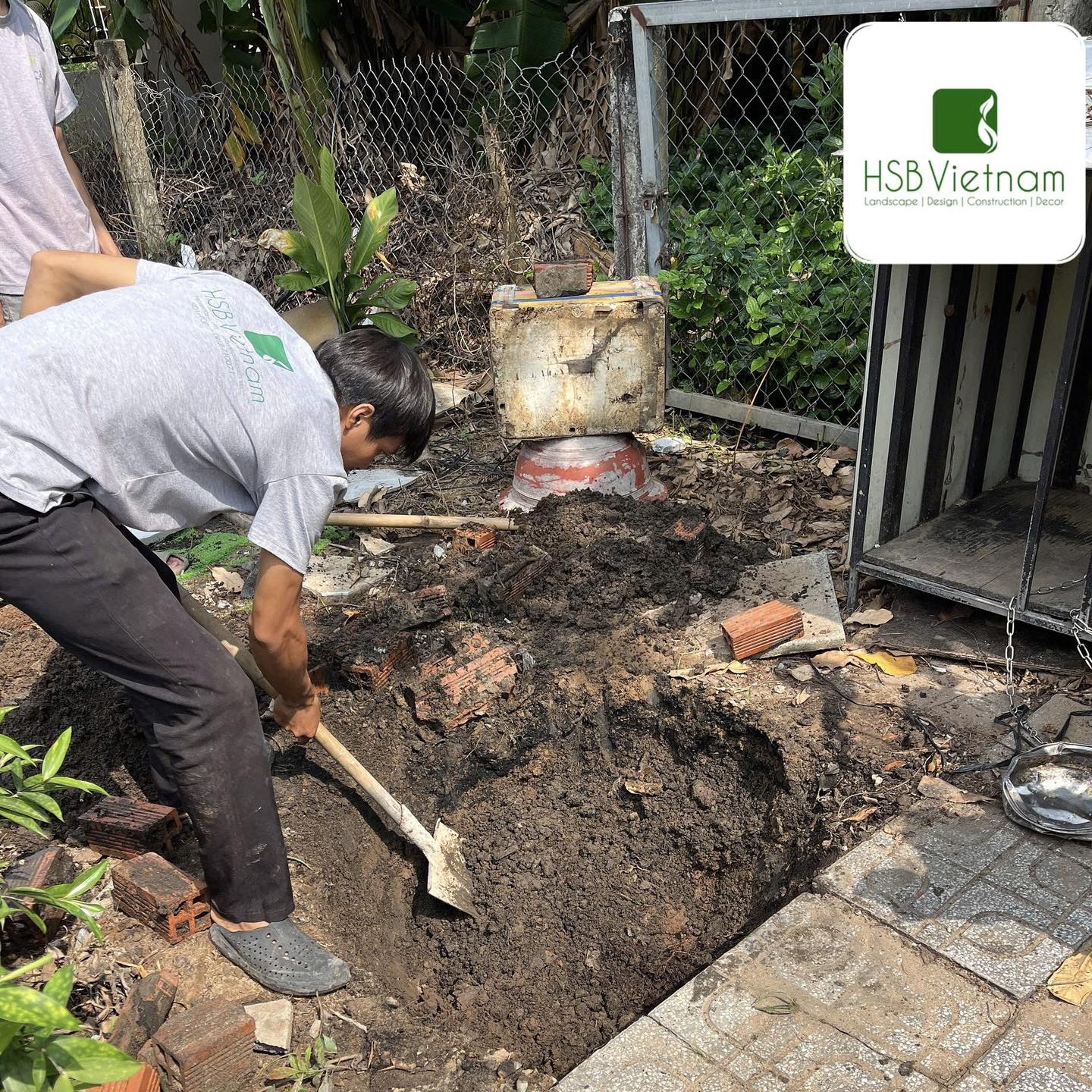
4. The 5-step process for organically improving garden soil.
| Step | Stage name | Core objectives | Specific actions |
| 1 | Assess the current situation | Identify soil "pathologies". | Check for color, odor, pH, compactness, and the presence of indicator organisms (worms, insects). |
| 2 | Breaking compression | Releases oxygen and prevents calluses. | Lightly aerate the surface using specialized tools to create aeration without disturbing the deeper soil layers. |
| 3 | Compensation for "black gold" | Regenerating the lost humus layer. | Add compost, vermicompost, or microbial organic fertilizer to create a nutrient "storage" system. |
| 4 | Biological activation | Establish a defense system. | Supplement with native microorganisms (IMO), Trichoderma or Mycorrhizae fungi to break down coarse matter and protect the root system. |
| 5 | Set up a "protective shield". | Protect and sustain life. | Mulching the soil with straw, bean husks, or dry leaves helps retain moisture, stabilize temperature, and protect against UV rays. |
5. Differences between soil improvement and conventional fertilization.
Many people are confused about this. garden land improvement with regular fertilization. However, the difference lies in the long-term perspective:
- Fertilizing: Providing nutrients directly to plants yields quick results but leads to rapid soil degradation and acidification.
- Organic renovation: Focus on building a healthy foundation for the soil. Healthy soil will automatically provide nutrients to plants in a sustainable and stable manner.
🌱 INVESTING IN LAND: SUSTAINABLE PROFIT
Instead of incurring the expense of replacing dead trees or spraying harmful pesticides, reclaiming "living space" It was the smartest investment from the start.
- Natural immune system: Antagonistic fungi destroy the pathogens themselves.
- Automated farming: Earthworms do the tilling for you every day.
- Absolute safety: A clean, green, and chemical-free environment for children.
"A tree only truly thrives when the soil is alive."
The journey to reviving a garden begins with listening to the voice of the earth. Methods for restoring degraded land. It's not difficult; the challenge lies in perseverance and understanding the laws of nature. By applying this philosophy... soil cultivationWith this, you not only own a beautiful garden but also a vibrant ecosystem right in the heart of the city.
See more at: Purely organic landscape design