Every day, our kitchens generate a large amount of vegetable and fruit peels and tea leaves – things that are generally considered polluting waste. However, in the eyes of professional gardeners at Caydecor, these are valuable resources for creating "black gold" for the soil.
1. What is composting? Why is it necessary to compost?
Composting (also known as green manure or organic fertilizer) is a process biodegradable Organic matter is produced under the influence of microorganisms, fungi, and soil organisms (such as worms and crickets) under controlled conditions.
Learning How to make compost at home It not only helps you minimize household waste but is also the most important step in the process. making organic fertilizer for the garden by recycling organic waste, you are directly participating in the cycle. soil cultivation, helping to revive the microbiome and create a purely organic landscape right in your own home
The result of this process is a nutrient-rich humus, dark brown in color, with an earthy smell, used to improve soil and sustainably provide nutrients to plants.
Operating principle: The "Brown" and "Blue" formulas
For microorganisms to function effectively, a compost pile needs a balance between two main groups of materials:
- Green Group (Nitrogen-Rich): It provides protein for microorganisms to reproduce.
- For example: Fruit peels, leftover vegetables, tea leaves, coffee grounds, fresh grass, fresh leaves.
- Brown Group (High in Carbon): It provides energy for microorganisms.
- For example: Dry leaves, straw, shredded cardboard, sawdust, and small dry twigs.
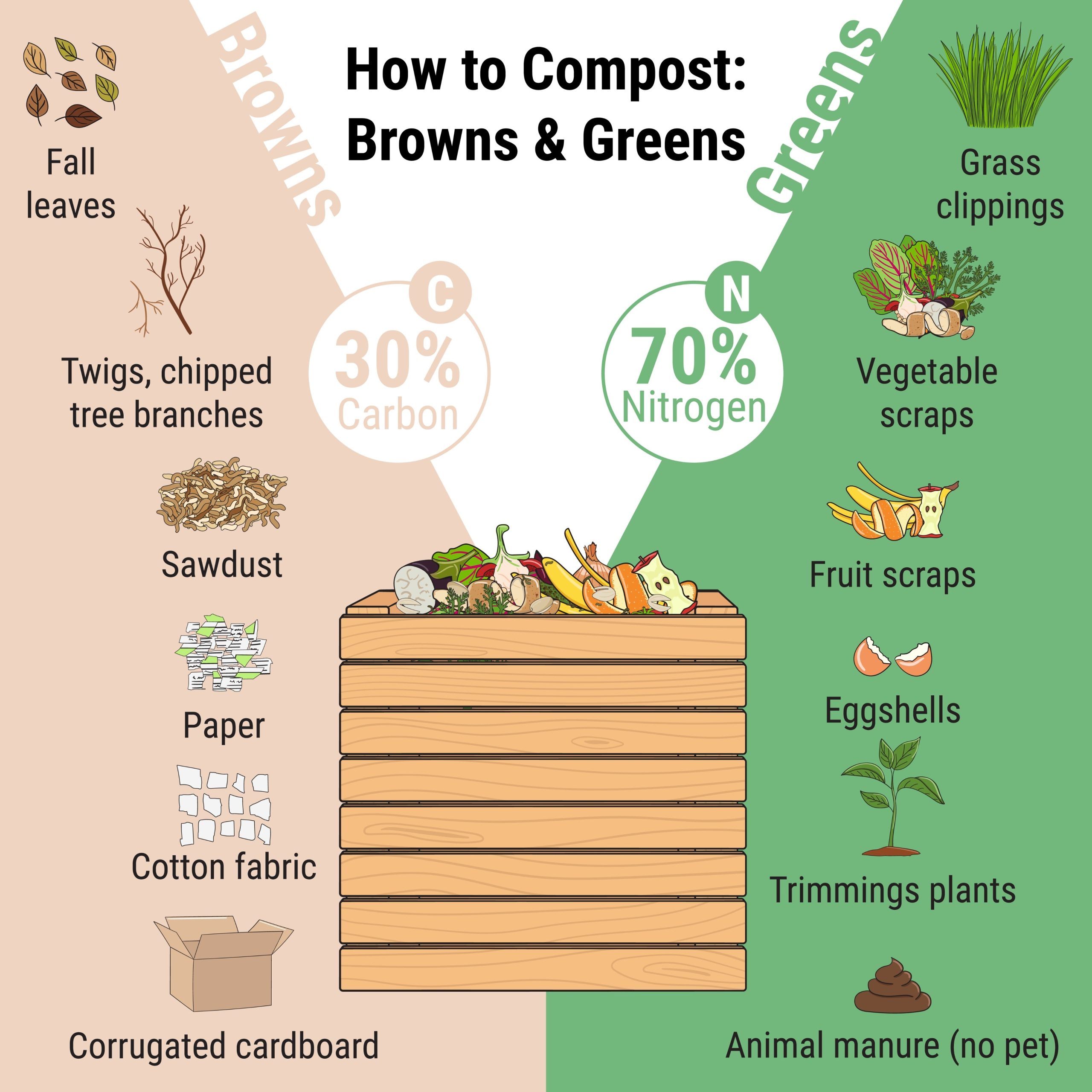
| Element | Brown Group (C – Carbon) | Green Group (N – Nitrogen) |
| Role | Provides energy, creates ventilation. | Protein source for microbial growth |
| Ingredient | Dry leaves, cardboard, straw, sawdust | Vegetable peels, coffee grounds, fresh grass, kitchen waste. |
| Optimal ratio | 30 portions | 1 portion |
| Signs of excess | The decomposition is very slow, and the compost pile is drying out. | It smells of ammonia, and the compost pile is sticky. |
Factors that determine success
A proper compost pile should not produce unpleasant odors and should decompose quickly if it meets these four criteria:
- Humidity: The compost pile needs to be as moist as a wrung-out sponge (approximately 40-60 LTP3T). Too wet will cause odor, too dry will inhibit microbial activity.
- Oxygen: Most current composting processes are aerobic incubationYou need to stir regularly to provide air for the microorganisms.
- Temperature: When microorganisms are highly active, the compost pile heats up. High temperatures (50-60°C) help kill pathogens and weed seeds.
- Size: The finer the ingredients are chopped, the larger the surface area, and the faster the decomposition process.
Benefits of making your own compost
- Soil structure improvement: It helps loosen the soil, retain moisture better, and improve drainage.
- Replacing chemical fertilizers: It provides sustainable nutrition, avoids shocking plant roots, and protects the soil ecosystem.
- Reduce waste: Utilizing up to 30% of daily household waste reduces pressure on landfills and decreases greenhouse gas (methane) emissions.
Things you "shouldn't" put in your compost pile.
To avoid unpleasant odors and attracting pests (rats, cockroaches), you should avoid:
- Meat, fish, and dairy products.
- Animal fats and oils.
- Feces of carnivorous animals (dogs, cats).
- The plants are severely diseased.
See more: Organic fertilizers vs. chemical fertilizers: Which is really better?
2. A 5-step process for making garden compost for beginners.
Composting at home isn't difficult; you just need patience and to follow these steps:
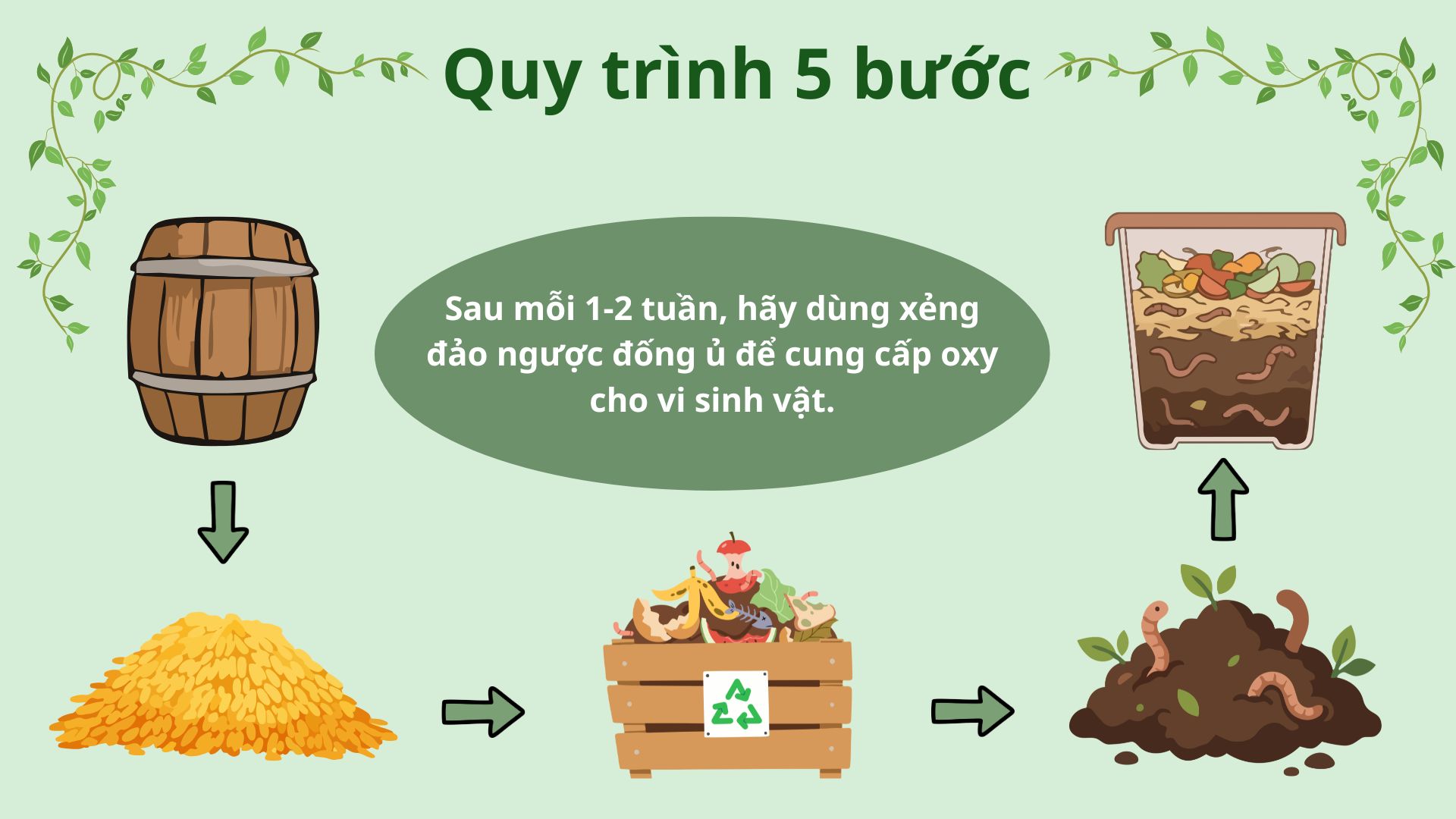
- Prepare the composting bin: You can use plastic containers with holes drilled around them for ventilation, or build a compost pit with bricks if you have enough space.
- Base Layer (Brown Group): Start by laying a 10-15cm thick layer of small branches or straw at the bottom to provide aeration.
- Alternate layers: Pour a layer of kitchen waste (Green) followed by a layer of dry leaves or shredded paper (Brown). Continue this process until the bin is full.
- Add a "starter": To speed things up, you can sprinkle in some microbial fertilizer or native IMO preparation.
- Check and mix: Every 1-2 weeks, use a shovel to turn over the compost pile to provide oxygen for the microorganisms.
3. From DIY to professional landscaping needs
Making your own compost at home is a wonderful experience that helps you better understand the concept. soil cultivationHowever, with large villa gardens, the amount of kitchen waste is often insufficient to rehabilitate the entire area of soil that has become hardened over time.
At this time, combining homemade compost with Caydecor's regular soil improvement and landscape maintenance services will yield optimal results. We offer various types of compost. microbial organic fertilizer Under strict quality control, it helps compensate for nutrient deficiencies and quickly establishes a sustainable ecosystem for your garden.
See more at: 5 effects of chemical fertilizers you should know.
Cost estimate table for making compost at home.
| Category | Detailed items | Estimated price (VND) | Note |
| Fixing device (Fixed) | composting bin | 0 – 600.000 | It costs 0 VND if you reuse old styrofoam boxes/buckets. |
| Mixing tools | 50.000 – 150.000 | Hand shovel or mini rake. | |
| Food preparation tools | 0 – 50.000 | Old knives/scissors to chop up trash. | |
| Supplies (Regular) | Microbial preparations | 30.000 – 80.000 | For example: Trichoderma (lasts a very long time). |
| "Brown" ingredients | 0 – 30.000 | Usually free (dried leaves, cardboard). | |
| Bokashi Rice | 50.000 – 100.000 | It only costs money if you use the dry fermentation method. | |
| Total | Savings model | ~30.000 – 80.000 | Reuse old supplies, just buy the microorganisms. |
| Professional model | 500.000 – 900.000 | Buy specialized containers and all the necessary tools. |
If you prioritize saving money: Choose to compost in a Styrofoam container or an old plastic container with holes drilled in it. The only cost you should incur is buying a composting kit. Trichoderma fungusIt helps the waste decompose faster and, most importantly, inhibits odors, preventing them from affecting neighbors.
If you live in a small space (apartment/balcony): Invest in one Bokashi fermentation barrel Having a drainage system would be a smart choice. Although it costs a little more, it's extremely clean, and you can use the "wastewater" (compost tea liquid) to dilute and water your plants, which is very good.
Take advantage of free resources: In Ho Chi Minh City, you can ask for coffee grounds at cafes or cardboard boxes from grocery stores to use as a completely free source of carbon and nitrogen.
See more at: Are the costs of purely organic landscaping really as "expensive" as rumored?
4. Significant changes during composting
When you first start composting, your compost pile will undergo very noticeable physical and chemical changes. This is a sign that the "microbial chefs" are working hard.

Here are the changes you will observe at each stage:
4.1. Changes in temperature (The most obvious sign)
Only after about 24–72 hoursThe compost pile will start to heat up.
- Phenomena: If you bring your hand close or insert an iron rod into the compost pile and then pull it out, you will find it warm (approximately $40-60^{\circ}C$).
- Reason: Aerobic bacteria are breaking down organic matter and releasing energy in the form of heat.
- Note: If the compost pile isn't hot, it may be too dry or lacking in nitrogen.
4.2. Changes in odor
The smell of the compost pile will change depending on how successful the process is:
- Initial phase: It may have a slightly sour smell or the smell of decaying vegetables.
- Once stable: The compost pile will have smell of damp earth Very natural.
- Warning: If a strong, foul odor (like rotten eggs) appears, it's a sign the compost pile is too wet or lacking oxygen. You need to add more dry leaves (Brown group) and mix it in immediately.
4.3. Changes in size and color
- Deflate: The compost pile will shrink in volume very quickly (potentially losing 30-50% of its original size) in just a few weeks.
- Color change: Leafy greens and vegetable peels will gradually lose their original color and change tone. dark brown or black.
- Structure: The raw materials begin to soften, crumble, and lose their original shape.
4.4. The arrival of new "residents"
Don't be too worried when you see these creatures; they are part of the ecosystem.
- White mold: The appearance of white mycelial masses (hyphae) is an excellent sign, indicating that the fungus is breaking down the tough fibrous material.
- Insect: Black soldier flies or earthworms may appear (if compost is in contact with soil). They help speed up the decomposition process.
| Phenomena | Meaning | Actions to be taken |
| Water evaporation/Heating | Microorganisms are highly active. | Maintain humidity; no further action is needed. |
| The compost pile is completely dry. | Lack of water or too much brown group | Water the plants more and add more kitchen waste. |
| There is brown liquid leaking out. | Composted tea (very rich in nutrients) | Collect the water and dilute it to water the plants. |
| Ammonia odor (pungent smell) | Excess of the Green (Nitrogen) group | Mix in some dried leaves, sawdust, or cardboard. |
Cultivating the land is nurturing the future.
The small act of putting orange peels and used tea leaves in a compost bin instead of a trash bag is the first step towards a sustainable lifestyle. When you choose... How to make compost at homeBy doing compost, you're not only enriching the soil but also protecting your family's health by eliminating chemicals from your living space. Remember: "Plants only truly thrive when the soil is alive" – and compost is that source of life.