In the hustle and bustle of city life, a small rooftop garden not only provides a refreshing green space but also serves as a kind of... ornamental plants It also provides clean, home-grown food. With limited land and farming conditions, choosing fruit trees to grow on a rooftop is a major challenge.
This article provides a detailed guide on choosing fruit trees for your rooftop, from assessing the space to a list of ideal trees and optimization tips. Let's begin your journey of selecting fruit trees for your rooftop!
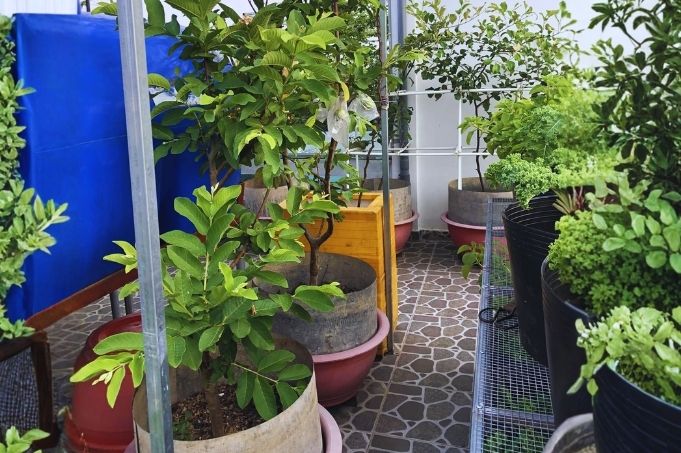
1. Understand your space.
Before choosing fruit trees for your rooftop, you need to understand your "territory." Rooftops often face many limitations in terms of space, sunlight, and urban climate.
Assess the rooftop area.
Accurately measure the rooftop area. Often, rooftops in homes contain large items like water tanks and solar panels, leaving limited space. Therefore, fruit trees for the rooftop should not be large; instead, prioritize dwarf trees or potted plants to save space. According to The Micro Gardener, choosing suitable plants helps increase space utilization efficiency. Draw a layout plan to avoid clutter, ensure clear pathways, and prevent interference with maintenance and installation work on rooftop equipment.
Lighting and climate conditions
Light is crucial for the growth of fruit trees. Rooftop locations typically receive sunlight throughout the day, making them suitable for sun-loving plants. If you choose shade-loving fruit trees for your rooftop, you'll need netting or a canopy. Rooftops are also frequently exposed to strong winds, so prioritize trees with robust root systems.

2. Criteria for choosing fruit trees for the rooftop
Choosing fruit trees for a rooftop requires specific criteria, based on experience and reliable sources, to ensure they are easy to care for and yield high productivity.
Tree size and characteristics
Prioritize dwarf or grafted varieties. For example, Thai hog plum or Thai apple trees are suitable, choosing trees that don't obstruct the view or have overly large canopies that make them prone to falling over.
Light and water requirements
When choosing fruit trees for your rooftop garden, select those that thrive in high-intensity sunlight: Sun-loving trees like Thai apples, Thai hog plums, and pomegranates are perfectly suited to these conditions.
Fruiting capacity and harvest time
Prioritize choosing early-fruiting varieties; grafted or cuttings are the most suitable options. For example, Thai hog plums can be harvested after 3-5 months, while guava trees propagated from cuttings will bear fruit after 6-8 months of planting.

3. Top 5 ideal fruit trees for rooftop gardens
Based on experience and reliable sources, here are the top 5 fruit trees for rooftop gardens that are easy to grow and high-yielding.
Sung My
Characteristic: Growing to a height of 1.5-2m, it is a shrub with dark green, large leaves, and its ripe fruit is sweet and rich in vitamins.
Fruiting time: American figs bear fruit after 6-8 months of planting, and the trees bear fruit year-round.
Take care of:
- Watering: Water the plant every 2-3 days because it prefers moderate moisture and cannot tolerate waterlogging.
- Fertilizer: Apply organic fertilizer regularly, once every 1-2 months.
- Light: The plant needs strong sunlight, 6-8 hours a day.

Thai Toad
Characteristic: Growing to a height of 1-1.5m, with a compact canopy, the fruit is green, slightly sour, and rich in vitamin C. It thrives in pots with a diameter of 35-40 cm and a height of 30-50 cm for long-term growth.
Fruiting time: 3-5 months after planting for grafted or cuttings. The tree can bear fruit year-round if properly cared for.
Take care of:
- Watering: Water regularly in the cool morning and afternoon.
- Fertilizer: Apply organic fertilizer every 1-2 months. Supplement with potassium during the fruiting stage.
- Light: As a plant that prefers sunlight, it needs to be placed in a location that receives plenty of sun.
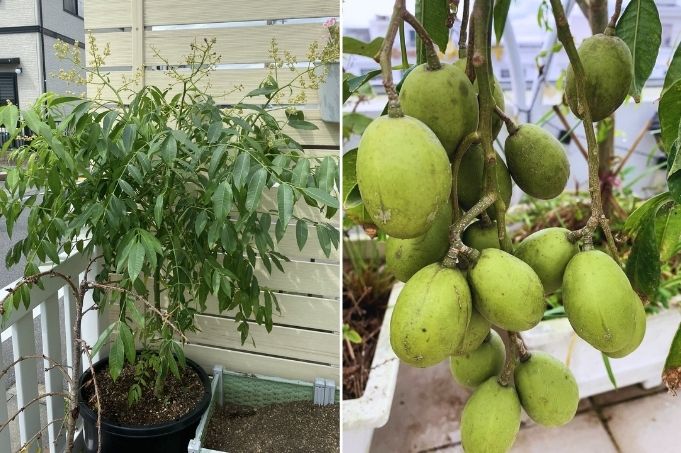
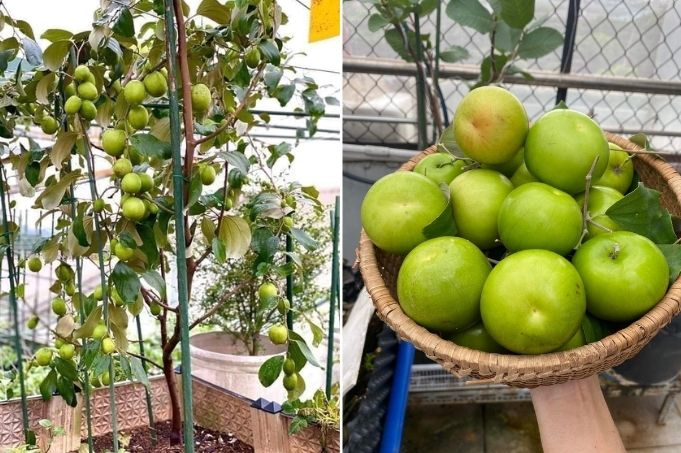
Thai apples
Characteristic: Growing to a height of 1.2-1.5 meters, with a compact canopy, the fruit is crisp, sweet, and rich in fiber.
Fruiting time: The harvesting time will vary depending on the apple variety and environmental conditions, and will take 4-5 months.
Take care of:
- Watering: 2-3 times during the hot season and once a week during the rainy season.
- Fertilizer: Organic fertilizers should be applied in spring and summer, and potassium should be supplemented during the fruiting stage.
- Light: The plant needs to be placed in a sunny location, receiving 6-8 hours of sunlight per day.
Pomegranate
Characteristic: Growing to a height of 1-1.5 meters, with red flowers and berries rich in antioxidants.
Fruiting time: The tree bears fruit 1 to 1.5 years after planting, flowering from February to May, and the fruit can be harvested from August to September.
Take care of:
- Watering: Water the soil every 2-3 days, maintaining slight moisture throughout the fruit development period, as a lack of water will cause the fruit to crack.
- Fertilizer: Apply organic fertilizer monthly and supplement with NPK during the flowering and fruiting stages.
- Light: High light intensity is needed, 6-8 hours a day.

Guava
Characteristic: Reaching a height of 1-1.5m, with a small canopy and crisp, sweet fruit rich in vitamin C, this is a popular fruit tree for rooftop gardens in Vietnam.
Fruiting time: Depending on the guava variety, the time it takes for the tree to bear fruit will vary, but on average, it will bear fruit about 6-8 months after planting.
Take care of:
- Watering: Water once a day, either in the early morning or late evening, adjusting the frequency depending on weather conditions.
- Fertilizer: Avoid using inorganic fertilizers high in nitrogen as this will cause the plant to produce many leaves and few flowers; instead, apply organic fertilizers periodically, once every 1-2 months.
- Light: Place it in a sunny location, with 6-8 hours of sunlight per day.

4. Tips for optimizing rooftop space when growing fruit trees
Optimizing space is key to successful rooftop fruit tree cultivation. I've transformed many small rooftops into green gardens using these tips.
Use plastic pots.
For woody plants like hog plums, pomegranates, and guavas, use plastic pots with a diameter of about 40cm and plenty of drainage holes to allow the roots to grow easily and for easy relocation. For shrubs and small herbaceous plants like strawberries, hanging pots or tiered shelves can be used to optimize space.

Automatic irrigation system
Using automatic irrigation systems helps save and regulate water usage while keeping the space tidier.
5. Notes on caring for fruit trees on the rooftop.
Proper care helps fruit trees thrive sustainably on rooftops.
Fertilizers and soil
Use loose, nutrient-rich soil and apply organic fertilizers such as chicken manure. earthworms Monthly. Organic fertilizer is a safe and suitable choice for fruit trees on rooftops, as this is often a living space for many people. In addition, using organic fertilizer significantly increases plant yield.
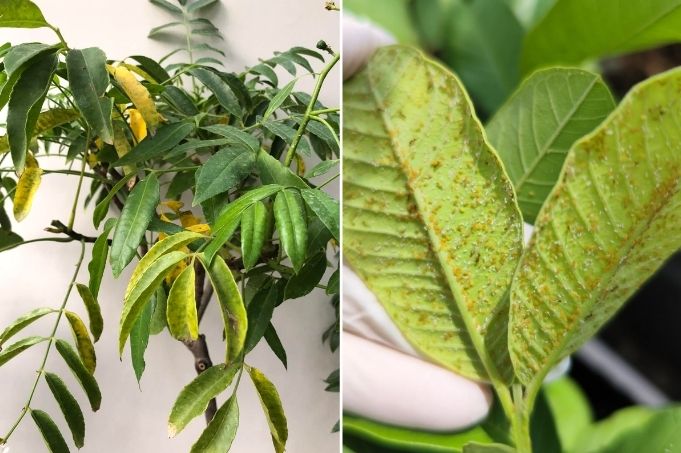
Protect plants from pests and diseases.
It is important to recognize early signs such as yellowing leaves, root rot, and early insect infestations in order to treat and prevent diseases in plants.
Coping with extreme weather
Because rooftop plants have weaker root systems and resistance compared to plants grown outdoors, they need protection and shielding during periods of harsh conditions.