Classification of ornamental trees according to their intended use.
Landscape trees are an essential group of plants used for decoration and creating a healthy ecosystem. To maximize the value of greenery, we must study the characteristics of each type of tree and combine them appropriately to create a lush green space and enhance the beauty of the landscape. Landscape trees are generally divided into three main groups: shade trees, ornamental trees, and ground cover trees. Each group has its own role and beauty, contributing to a perfect green natural environment.
Shade Tree Group
The group of shade trees typically consists of large, evergreen, deciduous trees. They average 5-50 meters in height and are long-lived, typically living for 30-40 years. These large trees are often planted along streets, in residential areas, offices, and schools. This shade tree group can be further divided into smaller subgroups, including: common shade trees, shade trees with beautiful flowers, fruit trees, and fragrant flowering trees. Specifically:
- Common shade trees: These are coniferous or broad-leaved trees such as pine, flowering larch, crape myrtle, Terminalia catappa, and Terminalia catappa. The advantage of this type is that it provides good shade and has an attractive appearance. They are often planted individually or in clusters in architectural projects, streets, and residential areas.
- Shade trees with beautiful flowers: This group of trees provides both shade and beautiful flowers for decoration at higher levels. They can be planted as focal points or combined with other landscaping trees. Some popular shade trees with beautiful flowers include: Bauhinia variegata, Terminalia catappa, flamboyant tree, and Lagerstroemia indica…
- Shade-bearing fruit trees: These include large or medium-sized trees that provide good shade, and especially bear fruit, such as coconut, sapodilla, star fruit, longan, lychee, etc.
- Fragrant flowering shade trees: These trees produce fragrant flowers with a pleasant scent. This group of shade trees is often planted in residential areas, offices, schools, hospitals, temples, and pagodas, such as pomelo, milkwood, pagoda tree, magnolia, and yellow magnolia…
Ornamental Plant Group
This group of ornamental plants is characterized by their woody stems, growing in clumps or individually, as climbing plants or herbaceous plants. These are low-lying ornamental plants, often grown indoors or on trellises. Some popular ornamental plants include: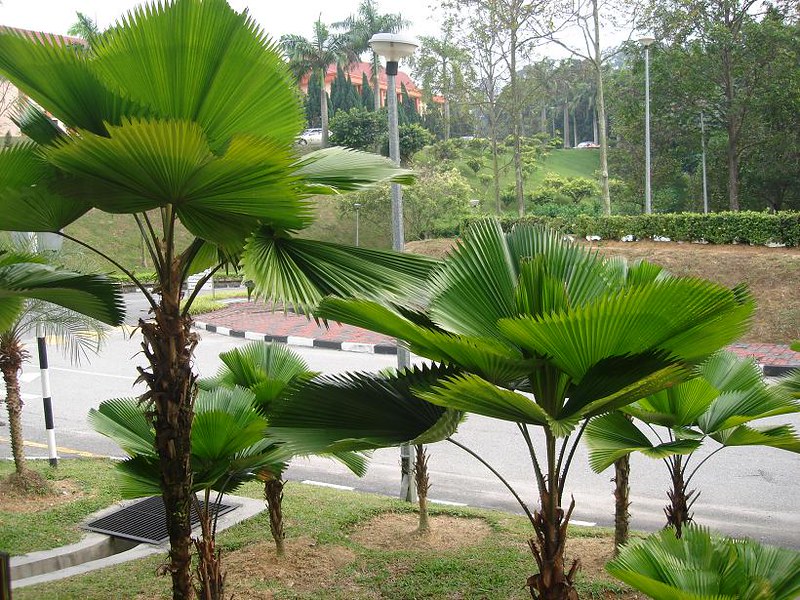
- Bamboo: This plant usually grows in clumps, reaching a height of 1-20m. Its advantages include a beautiful trunk and gracefully curved tops, adding a distinctly ethnic touch. Bamboo is often planted for decoration in villas, restaurants, and gardens.
- Areca palm: A tree 5-20cm tall, with an upright trunk and soft foliage. Besides being used for ornamental purposes, it is also used in food processing, medicine, and oil production.
- Climbing plants: This group of plants is excellent for decoration and providing shade. Depending on the architectural structure, you can choose the appropriate type of plant to create shade, cover walls, decorate gates, columns, etc.
- Hedge plants: These are woody shrubs with many branches. They are characterized by their dense foliage, evergreen foliage, and numerous stems and branches. They can be used as an alternative to brick walls, offering both decorative appeal and cost savings.
Ornamental Plants, Ground Cover Group
Ground cover plants are a group of ornamental plants that create a spacious and tranquil atmosphere. Furthermore, their biggest advantage is that ground cover plants help prevent soil erosion, retain moisture, and filter dust. This group often includes common plants such as: Bermuda grass, bamboo grass, ginger grass, etc.