

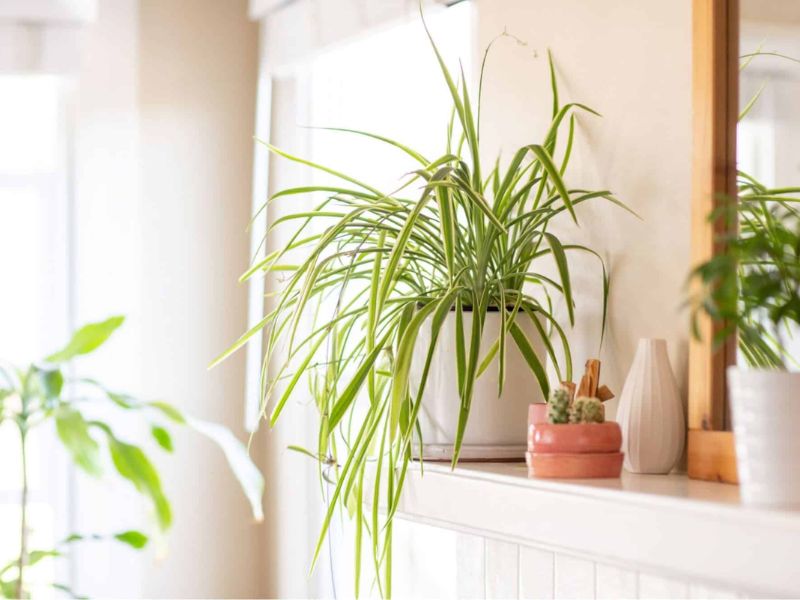
Spider plant, with its elegant beauty and ease of care, is becoming an increasingly popular choice for interior decoration. This plant not only brings a refreshing green space but also has profound feng shui significance. In this article, HSB Vietnam We will explore the outstanding features, feng shui significance, and guidance with you. How to care for spiderwortLet's find out more right now.
Characteristics of Spider Plant
- Scientific name: Chlorophytum comosum, also known as spiderwort, belongs to the Asparagus family (Asparagaceae).
- Other names: Spider plant, white orchid, mother-and-child plant, sparse green grass, spider grass.
- Source: Africa
- Classify: Long-leaved Phalaenopsis orchid, Striped-leaved Phalaenopsis orchid
- Physical characteristics: Spider plant (Chlorophytum) is a herbaceous plant of modest height, ranging from 20-40cm. Its leaves are lance-shaped, elongated, and gradually curve towards the tip, each leaf measuring 15-30cm in length with a white border. The plant has small, star-shaped flowers, usually growing in clusters at the ends of branches.
- Growth characteristics: Spider plant (Chlorophytum) is a fast-growing plant that typically forms small clumps. When planted in the ground, it can spread to a radius of about 60cm or more, but spreads less when grown in a pot. This plant can thrive in areas with natural or low light, making it suitable for indoor and office environments.

Characteristics of spiderwort
Uses of Spider Plant
Spider plant (Chlorophytum) is not only a beautiful ornamental plant but also offers many benefits for health and living spaces. It has excellent air-purifying capabilities, absorbing up to 95% of harmful substances such as formaldehyde, carbon dioxide, and harmful gases from electrical equipment, resulting in a healthier living environment. Furthermore, spider plants improve air quality by removing carcinogenic gases like formaldehyde.
Thanks to its compact size and delicate appearance, the spider plant is often used to decorate homes, offices, and gardens, adding a touch of elegance to living spaces. It's also a meaningful gift choice, conveying a message of good luck and health to the recipient.
The Meaning of Spider Plant
Spider plant (Chlorophytum) is not only an ornamental plant but also a symbol of good fortune and peace in feng shui. With its strong appearance and resilient growth, the spider plant represents unwavering willpower and the ability to overcome difficulties. In feng shui, spider plant is considered a protective amulet, warding off evil spirits and bringing peace and good luck to the homeowner. It is also seen as a symbol of prosperity, attracting wealth and success in one's career. In particular, the plant is very suitable for people with the Water element and those born in the year of the Goat, bringing many advantages and good fortune in life.
How to Grow and Care for Spider Plant at Home Easily
Methods for Growing Spider Plant
- Planting using seedlings separated from the root system: This is the most common method for propagating spiderwort. You need to select healthy spiderwort plants and separate them into small sections, each with at least one root and a few leaves. Then, you can plant these sections in pots or in the ground; they will quickly grow and form new clumps.
- Propagation by seeds: If you want to start from scratch, you can sow spiderwort seeds. First, prepare light, well-draining soil. Sow the seeds evenly on the surface of the soil, cover with a thin layer of soil or sand, and keep it moist. The seeds will germinate after a few weeks, and you can transplant them into pots when the seedlings are large enough.
- Growing aquatic plants: Spider plants can also be grown in water, creating a unique decorative effect. Place the plant in a container of clean water, ensuring that the roots are submerged. Change the water regularly, and the plant will thrive in its aquatic environment.
How to Grow Spider Plant
- Preparing the soil for planting: Spider plants thrive in light, well-draining soil. You can use a mixture of regular potting soil and sand to improve drainage. Ensure the soil doesn't become waterlogged to prevent root rot.
- Proceed with planting: When planting spiderwort, dig a small hole and place the seedling or root cutting in it. Fill with soil and gently press to ensure the plant is stable. For potted plants, choose a pot with drainage holes to prevent waterlogging.

How to grow spiderwort
How to Care for Spider Plant
- Light: Spider plants prefer soft light and don't need too much direct sunlight. Place the plant in a location with indirect light or soft sunlight for optimal growth.
- Watering schedule: Water regularly, but avoid overwatering. Allow the surface of the soil to dry between waterings. When growing hydroponically, change the water frequently and ensure it is clean.
- Soil for cultivation: Ensure the soil maintains optimal moisture levels and good drainage. If the soil dries out too quickly or becomes waterlogged, adjust the moisture level to suit the plant's needs.
- Temperature: Spider plants thrive at room temperature, around 18-24°C. Avoid placing the plant in areas with excessively high or low temperatures to prevent shock.
- Fertilizing: Fertilize regularly 1-2 times per month with an all-purpose fertilizer. Avoid over-fertilizing to prevent harming the plant.
- Pest and disease control: Inspect the plants regularly for pests and diseases. If you see signs of disease or pests, treat them immediately by cutting off the affected parts or using appropriate pesticides.
By mastering the knowledge of the characteristics, significance, and care of spiderwort, you will be able to maximize the benefits this plant offers. Hopefully, HSB Vietnam's guidance will be helpful to you in planting and caring for spiderwort. If you want to learn about other plant care tips, follow us to get the latest updates as soon as possible.





