In the context of rapid urbanization and increasingly evident climate change, the concept of "ecosystem" is no longer a foreign term in environmental science but has become the foundation for all sustainable development strategies. When we talk about greenery, landscaping, or urban agriculture, we are not just talking about aesthetics or yield, but directly impacting the structure and balance of the ecosystem. Therefore, organic farming is not simply a farming method, but a way for humans to choose to interact with nature in a more harmonious and sustainable way.
1. What is an ecosystem? Understanding it correctly is key to applying it correctly.

Ecosystem An ecosystem is a system comprising living organisms (plants, animals, microorganisms) and their surrounding physical environment (soil, water, air), interacting with each other through cycles of matter and energy flow. In an ecosystem, no component exists independently; all elements are interconnected and interdependent.
A complete ecosystem includes:
- Producers: primarily green plants, capable of photosynthesis and producing organic matter.
- ConsumersAnimals, insects, and humans.
- decomposersBacteria, fungi, earthworms, etc., are responsible for breaking down organic matter and returning nutrients to the soil.
- Infertility factors: soil, water, light, temperature, minerals.
When these components function harmoniously, the ecosystem maintains stability, resilience, and biological balance. Conversely, if one link is broken, for example, due to a decline in soil microorganisms or water pollution, the entire system can be affected in a chain reaction.
2. Soil ecosystems – the silent foundation of plants.

In landscaping and horticulture, soil ecosystems play a core but often overlooked role. Soil is not just a substrate for roots; it is the habitat of billions of microorganisms per gram. This microbial ecosystem is involved in:
- It breaks down organic matter into easily absorbable nutrients.
- Protein fixation and mineral metabolism.
- Inhibits natural pathogens.
- Improve soil structure and water retention capacity.
When soil is healthy, plants have strong root systems, increased resistance, and reduced need for chemical intervention. Conversely, soils poor in organic matter or those subjected to long-term overuse of inorganic fertilizers will experience a decline in microorganisms, loss of porous structure, and increased susceptibility to erosion.
Therefore, protecting soil ecosystems is the foundation of all sustainable planting strategies.
3. What is organic farming?
Organic farming This is a farming method based on the principle of respecting and nurturing the natural ecosystem. Instead of relying on chemical fertilizers and synthetic pesticides, this model uses:
- Compost, well-rotted manure.
- Beneficial microbial preparations.
- Biological pest control methods.
- Cover the land with a flat surface. organic materials.
- Crop rotation and diversification.
The core principle of organic farming is to nourish the soil before nourishing the plants. When the soil is properly regenerated, plants will grow more sustainably and be less dependent on artificial inputs.
4. Why is organic farming important for the ecosystem?
4.1. Protecting and restoring biodiversity
Healthy ecosystems require biodiversity. Widespread use of chemical pesticides can kill not only pests but also beneficial insects, disrupting the natural food chain. Organic farming prioritizes biological balance, creating conditions for natural predators to thrive, thereby naturally reducing pest pressure.
In urban spaces, an organic garden can attract bees, butterflies, and small birds – natural pollinators and pest controllers. This contributes to maintaining a sustainable biological cycle.
4.2. Long-term soil quality improvement
Organic fertilizers and mulching materials help increase humus content, improve soil structure, and enhance moisture retention. Organic-rich soils are better at absorbing and storing carbon, contributing to reduced greenhouse gas emissions.
Meanwhile, long-term reliance on inorganic fertilizers can lead to soil compaction, reduced microbial activity, and increased risk of nutrient leaching into the environment.
4.3. Protecting water resources
When excess chemical fertilizers are washed away, they can contaminate surface and groundwater. Eutrophication in ponds and lakes is a prime example of nutrient imbalance.
Growing organic crops significantly reduces the amount of chemicals dissolved in irrigation water, helping to protect water resources and aquatic ecosystems.
4.4. Enhancing resilience to climate change
Organic-rich soil retains water better during the dry season and drains effectively during the rainy season. This helps plants adapt better to extreme weather conditions.
In addition, a diverse and balanced ecosystem helps reduce the risk of pest outbreaks when the climate changes.
4.5. Protecting human health
Ecosystems are not just a matter of nature; they are also directly related to public health. Green spaces are organic farming Reducing the risk of chemical residue is especially important for young children, pets, and public areas.
In urban environments, where contact density is high and natural space is limited, each organic garden acts as a miniature "biological filter," contributing to improved air quality and the living environment.
5. Organic planting in urban landscapes: From trend to strategy

Currently, many housing projects, resorts, and new urban areas are gradually shifting towards an organic landscape management model. The reasons lie not only in environmental factors but also in long-term economic value.
A stable soil ecosystem helps to:
- Reduce fertilizer costs over time.
- Limit replacing trees that have died due to pests or diseases.
- Increase the lifespan of lawns and shade trees.
- Enhance the brand image to be green.
Instead of viewing greenery as merely decorative, developers are beginning to see landscape ecosystems as part of sustainable infrastructure.
6. How to build a small, "purely organic" ecosystem at home.
To implement a sustainable, purely organic landscaping application, you can start with these simple steps:
- Embrace diversity: Don't worry too much if you see a few worms or insects. That's a sign your ecosystem is "alive."
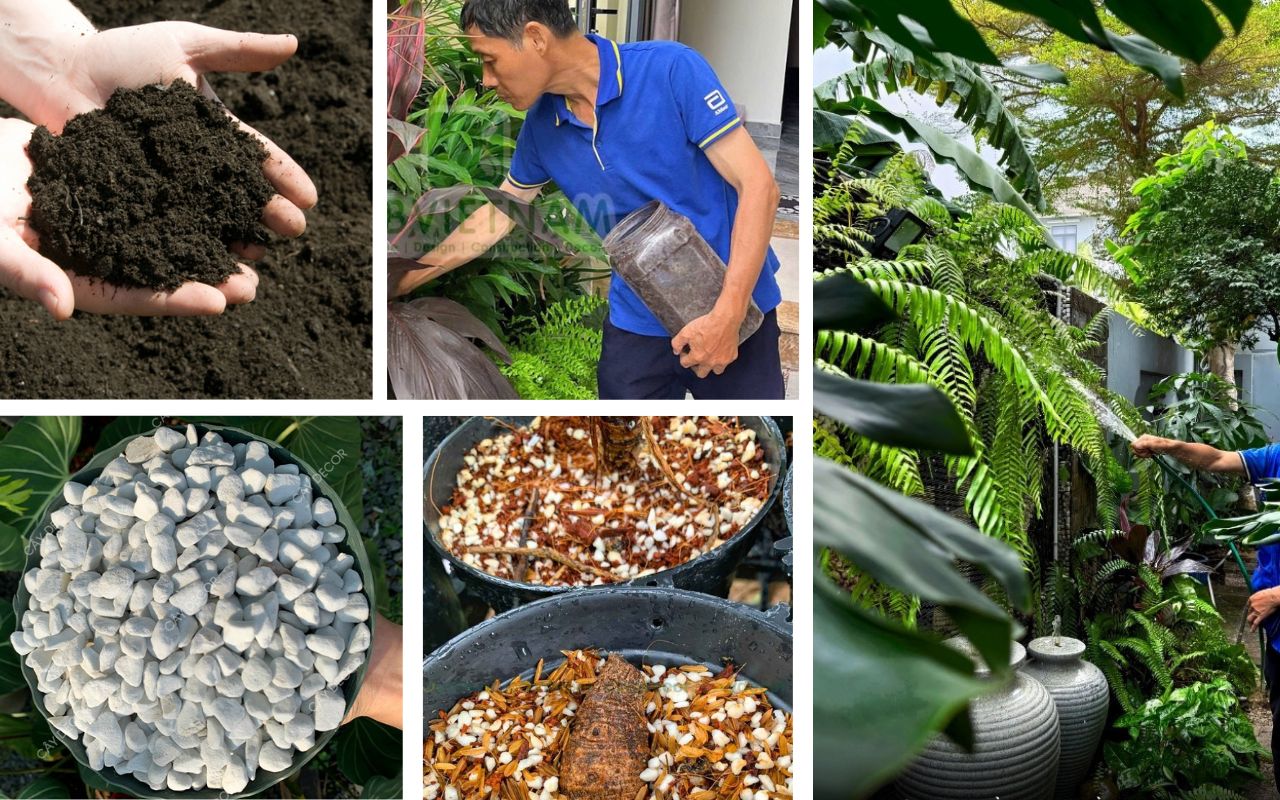
- Change the growing medium: Use a mixture of loam soil, compost, and stone mineral to create aeration for microorganisms to thrive.
- Using geotextile fabric: To separate the soil layers, keep the drainage system clean, and protect the stability of the potted plant's ecosystem structure.
- Slow fertilization: Prioritize earthworm castings, fermented chicken manure, or banana extract instead of synthetic NPK fertilizers.
Some people argue that organic farming is more difficult to control pests and diseases or is more expensive. In reality, the initial costs may be higher due to the need for soil improvement and investment in quality organic fertilizers. However, once the ecosystem is established, maintenance costs typically decrease significantly.
The biggest challenge lies not in the technique, but in the mindset. Organic farming isn't about "doing nothing," but about doing the right things and patiently allowing the ecosystem to balance itself.
7. Sustainable ecosystems begin with small choices.
Every decision regarding the use of fertilizers, pesticides, or mulching materials impacts the surrounding ecosystem. When many individuals and projects shift to organic farming practices, the cumulative impact creates greater change on a community scale.
Ecosystems are not a distant concept; they are present right beneath our feet – in the soil, in the canopy of trees, and in the air we breathe every day.
Conclude
Understanding ecosystems helps us realize that planting trees is not just about beautifying a space, but about directly intervening in a complex living system. Organic planting is important because it protects soil structure, maintains biodiversity, protects water resources, and contributes to improving public health.
In the future of sustainable urban development, each organic garden will not only be an aesthetically pleasing green space but also a crucial link in the urban ecosystem network. Therefore, choosing organic methods is not just a trend, but a long-term strategy for people to live in greater harmony with nature.