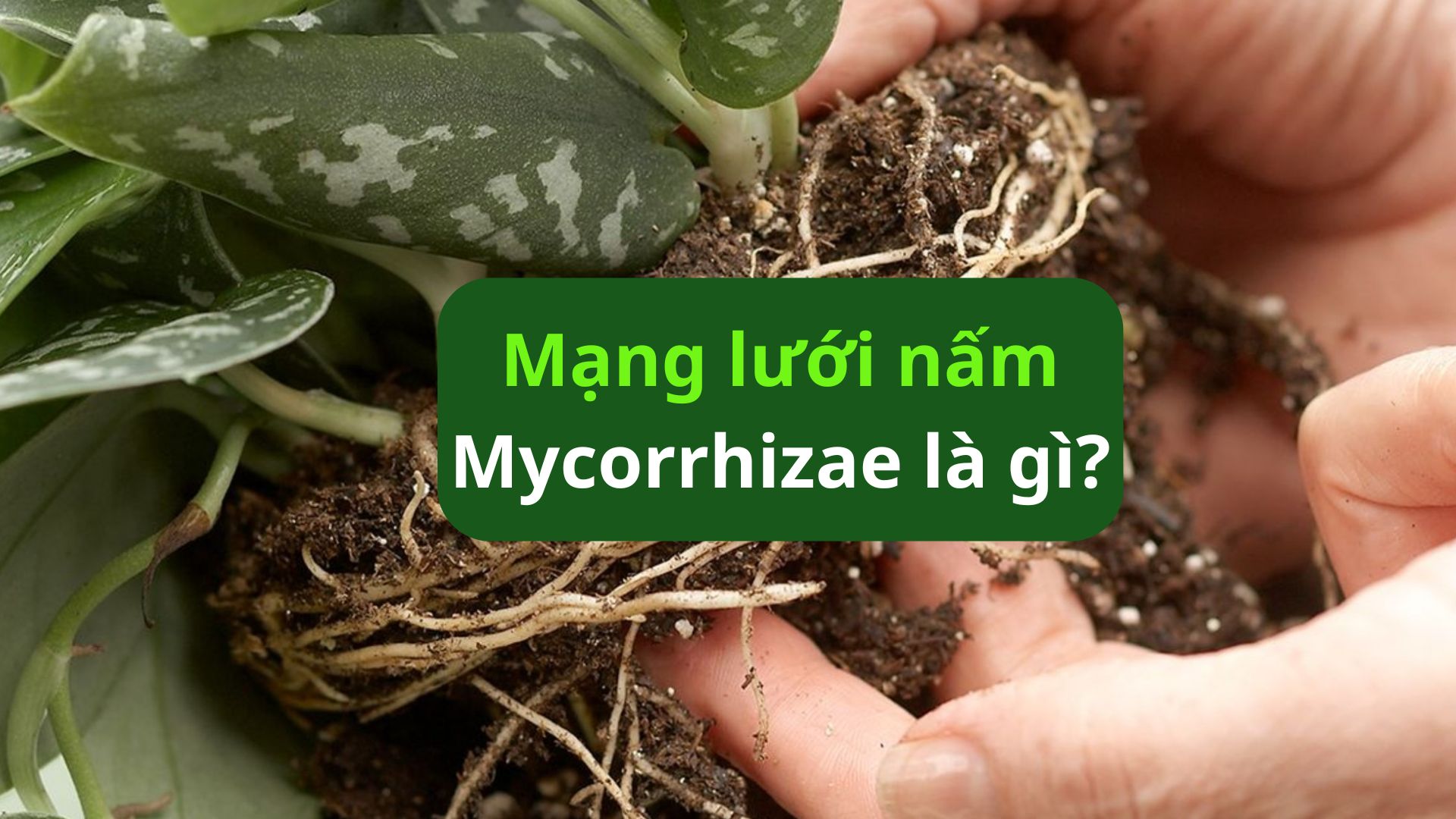
Discover the Mycorrhizae network – the biological internet that helps plants communicate and resist disease. Learn how to cultivate soil fungi according to Caydecor's philosophy of living in harmony with the ecosystem and organic soil cultivation. Deep beneath the lush green lawns lies a miraculous communication network, more sophisticated and efficient than any human internet system. Mycorrhizae – the symbiosis between fungi and plant roots – is the "soul" that connects your entire forest garden ecosystem into a unified whole.
What are Mycorrhizae fungi? The million-year-old "agreement" between fungi and plants.
Mycorrhizae are not a disease, but rather a symbiotic relationship between fungi and plant roots that has existed for over 400 million years. In this relationship, the fungi attach to or invade the roots, creating microscopic hyphae that spread throughout the soil.
- Fair exchange: The plant provides the fungus with excess sugar from photosynthesis. In return, the fungus acts as an extended root system, helping the plant absorb water and minerals in places where ordinary plant roots cannot reach.
- Microscopic structure: Fungal hyphae are hundreds of times smaller than plant roots, allowing them to penetrate even the smallest crevices in the soil structure to find sustenance.
See more: The role of organic and microbial fertilizers in purely organic landscapes.
| Analytical aspects | Advantages (Outstanding Benefits) | Disadvantages & Limitations (Biological Hidden Aspects) |
| 1. Nutrition & Water Management | Maximize root zone expansion and break down insoluble bonds: • The hyphae of fungi have a diameter only 1/10 that of plant roots, and they penetrate into the pores of the soil to absorb water. • Enzyme secretion Phosphatase and strong organic acids to dissolve phosphorus ($P$) fixed in the soil, releasing organic nitrogen which is transferred to plants. | The "Carbon Tax" mechanism (Carbon Cost): • The plant must pay the price of 10% – 30% of photosynthesized sugars from photosynthesis to nourish the fungus. • In climates with little sunshine or during winter, maintaining this “tax” causes the plants to suffer severe energy depletion. |
| 2. Population Interaction (Wood Wide Web Network) | Social security and emergency relief systems: • Relief: The mature plants share a common network with the seedlings, transferring nutrients through fungal hyphae to help the seedlings survive in the shade. • Warning: When infested with pests, plants transmit chemical signals (such as Jasmonate) through fungal hyphae. Neighboring plants that receive these signals immediately activate resistance genes before the pests attack. | Ecological injustice & encroachment: • Resource monopoly: The trees are large and healthy.Dominant TreesFungal networks can be used as a tool to "drain" the resources of weaker plant species, increasing growth spacing. • Transmission pathways for invasive plants: Some invasive weed species have the ability to connect to networks and steal nutrients from native plants. |
| 3. Immunity & Biological Protection | Multilayered biological shield: • Physics: It forms a fungal mantle that covers the roots, preventing nematodes and harmful fungal spores from entering.Fusarium, Phytophthora) intrusion. • Chemistry: Natural antibiotic secretion. • Detoxify: It isolates heavy metals (lead, arsenic, cadmium) in the vacuoles of fungi, preventing them from migrating to the stem, leaves, and fruit. | The double whammy of dependence and vulnerability: • When plants become overly reliant on fungal protection, the root's own immune system tends to become "overly dependent" and reduces the production of defensive substances. • If the fungal network is suddenly destroyed (due to natural disasters or chemicals), the host plant will be in an extremely vulnerable state to disease. |
| 4. Impact on Soil Structure | Creating a "living space" structure: • Secretion Glomalin – an extremely stable glycoprotein that acts as a glue, binding humus and sand/clay particles together into granular structures (aggregates). • Helps the soil increase its organic carbon retention rate, prevents erosion from heavy rains, and creates aeration spaces for aerobic microorganisms to thrive. | Toxins accumulate if the mushrooms die in large numbers: • When fungal networks are suddenly destroyed over a large area (for example, after heavy fungicide application), the amount of dead fungal biomass can cause a sudden change in local soil pH and lead to temporary soil hypoxia due to excessive activity of decomposing bacteria. |
| 5. Response to Man-Made Influences | Reduce long-term fertilizer costs: • In sustainable farming or reforestation, fungi help reduce irrigation needs by up to 50% and restore desertified or post-mining lands without the need for chemical fertilizers. | Extremely sensitive and vulnerable: • Plowing: Destroying the network structure (which takes months to years to rebuild). • The fertilizer paradox: When humans apply too much easily soluble phosphorus fertilizer ($P$), the plant's roots will lock up, preventing symbiotic fungi from growing. The fungi then become parasites (reverse parasitism) or starve to death. |
“Wood Wide Web” – How plants in the garden communicate and support each other.
Mycorrhizal fungi don't just connect to a single plant; they link a multitude of individuals in the garden together into a unified network.
Soil fungal networks act as an incredibly complex biological "data transmission system." Through fungal hyphae that permeate the soil, the plants in your garden can share resources and information with each other. When a plant in a corner of the garden is attacked by pests, it sends chemical signals through its mycorrhizal network to warn neighboring plants. Upon receiving this "message," the surrounding plants will proactively activate their defense systems, producing compounds that repel insects before they can attack. Even more interestingly, in an ecosystem established in this way... urban forest gardenIn this network, the "mother trees" (large, old trees) can redirect nutrients and sugars to seedlings lacking sunlight in the lower layers, helping them to survive. This is the most beautiful manifestation of this. living in harmony with the ecosystemThere is no life-or-death competition, only mutual support and sustainable symbiosis. Disrupting this network with harsh plowing or the use of toxic chemicals will leave plants isolated, weak, and vulnerable to environmental changes. At Caydecor, we protect this "biological internet" as we protect the soul of the garden.
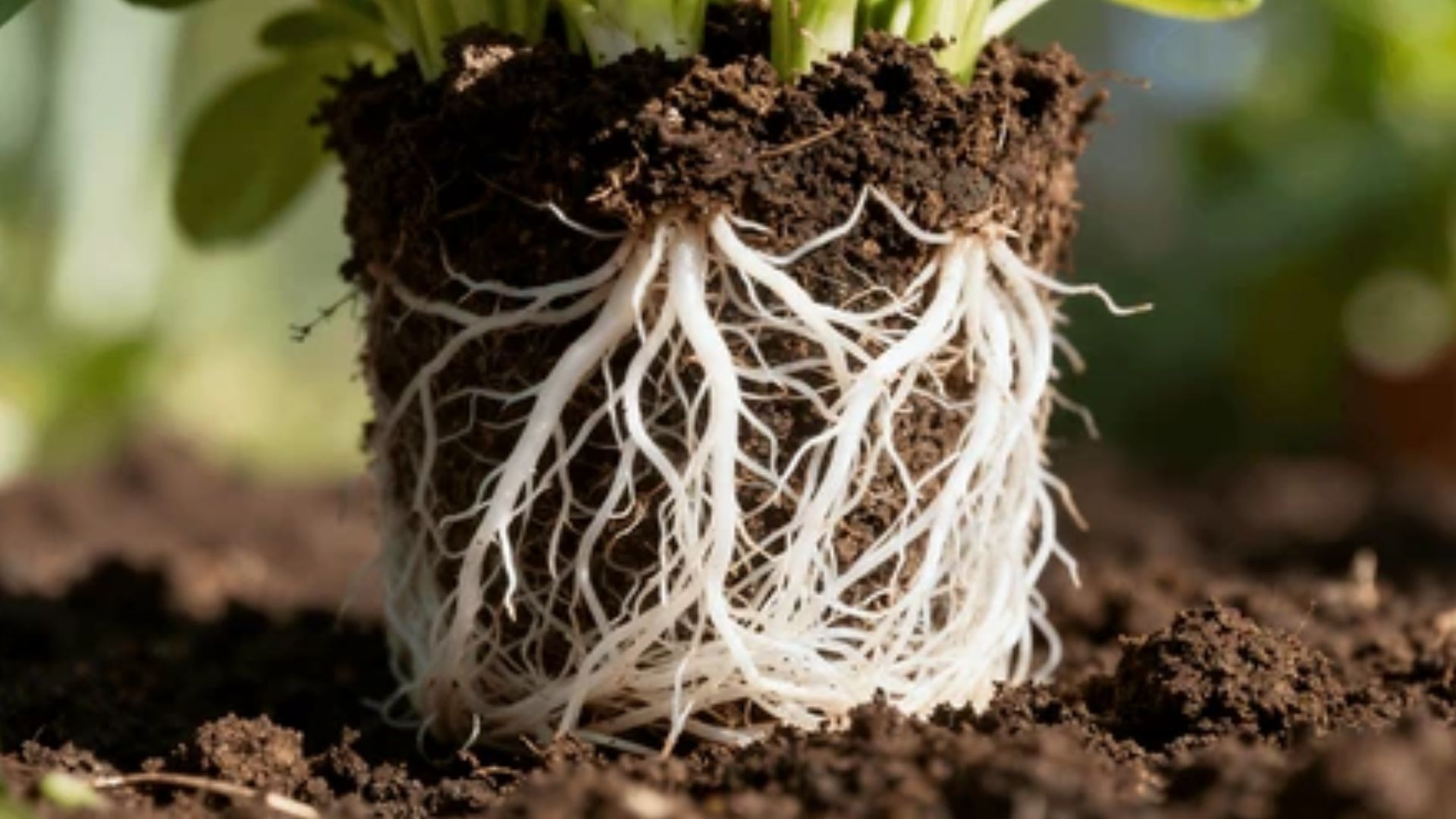
The role of mycorrhizal networks in soil and plant health.
In strategy soil cultivationMycorrhizal fungi are the greatest "builders" of all time:
- Increased absorption: Fungi help plants absorb phosphorus and insoluble micronutrients much more efficiently than conventional chemical fertilizers.
- Root protection shield: The fungal coating around the plant roots acts as a filter, preventing harmful fungal diseases (such as Phytophthora) penetrates the root tissue.
- Renovate the structure of the pellets land: Fungal hyphae secrete glomalin – a type of biological glue that helps bind sand and dust particles into loose, porous clumps, allowing the soil to "breathe" better and retain moisture longer.
Cultivating the soil to activate a sustainable mycorrhizal network.
This bio-internet system is extremely sensitive. To cultivate the soil fungi, Caydecor applies specific technical procedures:
One of the most common mistakes made by traditional gardeners is the overuse of high-concentration chemical fertilizers (NPK). When the soil has an excess of chemical fertilizer, plants become "lazy" and stop supplying sugars to fungi, causing the mycorrhizal network to degrade and disappear. At this point, the soil becomes compacted and loses its ability to recover. In the process... garden land improvement At Caydecor, we focus on organic remediation and the direct addition of beneficial fungal spores. We combine Mycorrhizae with humus-rich compost to create an ideal habitat. More importantly, we implement a process... ground covering (mulching) Using natural materials to maintain stable soil temperature—a prerequisite for the fungus to thrive under the intense southern sun. Once the fungal network is restored, it will completely replace the role of harmful chemical fertilizers, giving crops superior self-resistance. This is how we realize our philosophy. soil cultivationIt's not about fertilizing the plants, but about nurturing the ecosystem so that the soil can naturally nourish the plants itself.
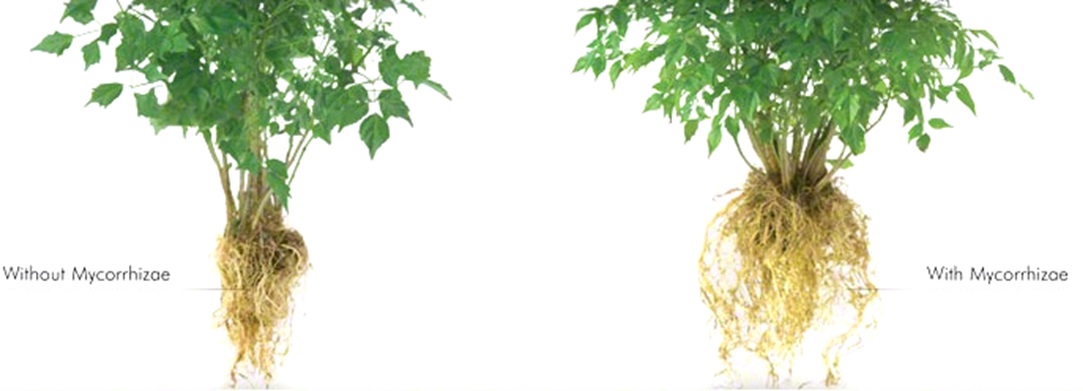
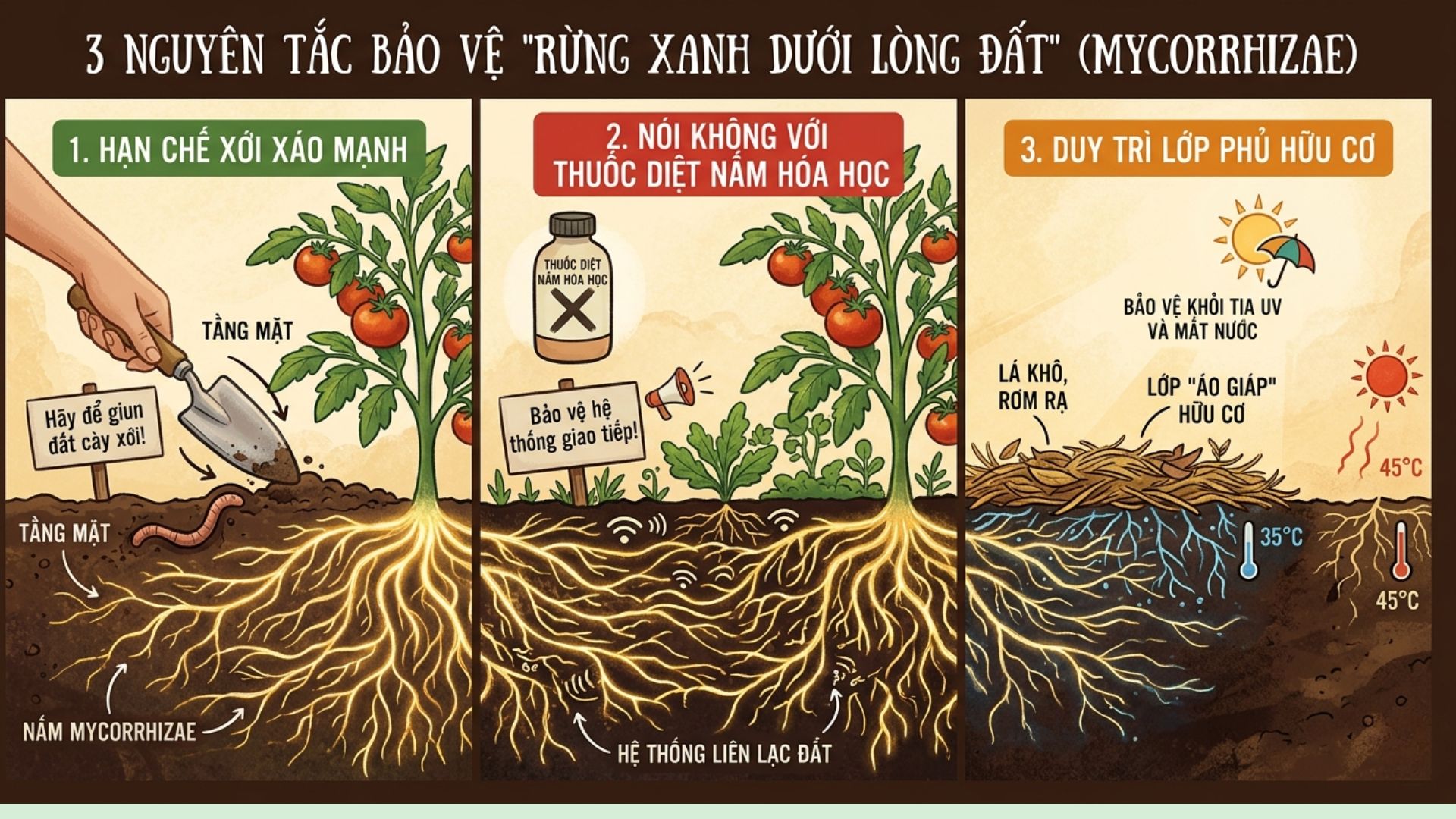
3 things to keep in mind to protect the "biological internet" in your garden.
To maintain a long-term mycorrhizal network, homeowners should pay attention to the following:
- Limit vigorous tilling: Digging too deep will break the interconnected fungal hyphae. Let earthworms do the tilling for you.
- Say no to chemical fungicides: These pesticides kill both harmful and beneficial fungi, paralyzing the garden's communication system.
- Maintain the organic mulch: Always keep the ground covered with a layer of dry leaves or straw to protect the mushrooms from UV rays and dehydration.
See more: What is organic mulch? Why is mulch important for landscaping?
Connection creates lasting strength.
Understanding mycorrhizal fungal network It's about understanding the humility and cooperation of nature. A truly exceptional garden is not only beautiful in its vibrant foliage, but also in the robustness and intelligence of its underground interconnected systems. By choosing the right solution... soil cultivation With Caydecor, you are giving your garden a "biological brain" so it can take care of itself, protect itself, and work alongside you. living in harmony with the ecosystem Peace.
See more: Price list for organic landscape care services 2026